QUICK NOTE: To buy any product reviewed below, click on the Buy Now button to go directly to the appropriate page on another secure site to get more information on that product and/or make a purchase. The “Bob’s Pick” logo below indicates which of the products below has earned Bob Gillespies highest purchase recommendation. Below the reviews is a SIDE-BY-SIDE COMPARISON CHART and, finally, an article by Bob Gillespie on important features to consider when shopping and why.
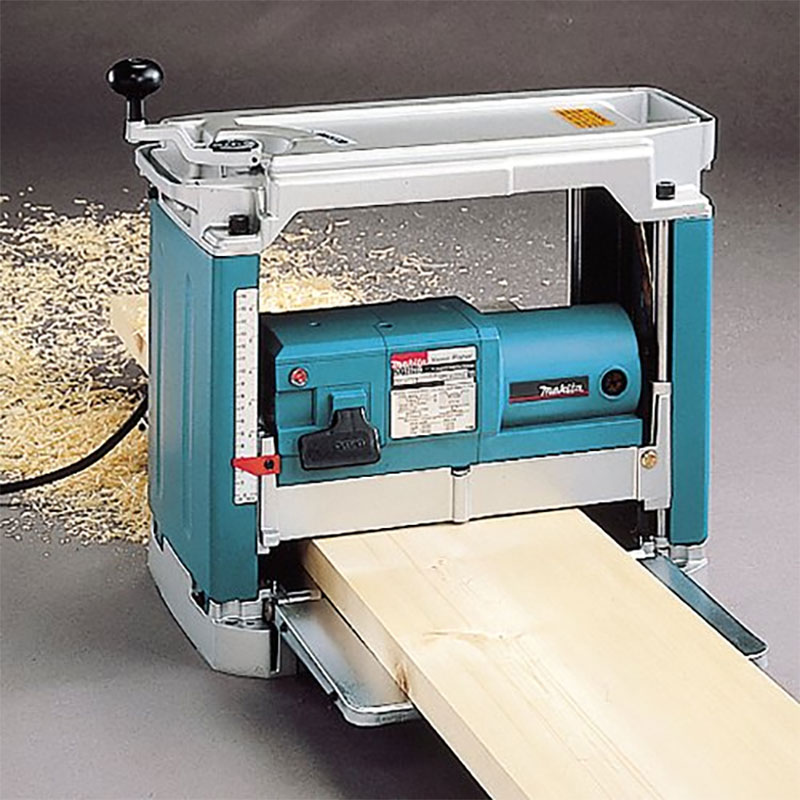
JET JJP-10BTOS 10 JOINTER/PLANER COMBO WITH STAND
This planer/jointer combo will save you money and space. You can easily transport it from the shop to the jobsite. On the other hand, its not much in the power or capacity departments. For small projects, it does an adequate job. The planer features a sheet metal outfeed table to reduce snipe which is a deep dig at the tail end of a board that is hanging over the end of the outfeed table. All jointers will snipe a board that is extended too far past the end of the planer’s outfeed table. Its simply a matter of having a planer table bed long enough for the length of the board you will be planing… or having someone or something (like a roller stand) to support the board further out from the planer outfeed table.
The motor in this planer is rated at 13 amps. The horsepower is not specified. There are only two knives in the planer cutterhead. 3 knives is the norm and some of the machines reviewed here have 4 knives. A planer cutterhead RPM of 9000 and 2 knives equates to 18,000 cuts per minute. There is only one feed speed for the planer and that is 19.5 FPM. The planers maximum depth of cut across a 10 board is just 0.08 inch. The planer weighs 73.9 Lbs. An 8 version of this planer jointer is also available for about $100 less but that bench-top planer does not have a stand.
JET JJP-12 12 PLANER/JOINTER
This model is a much more capable jointer planer than the one above, although it is not really portable. For starters, the motor is 3 HP which is more than adequate for a jointer planer of this size. The cutterhead has 3 knives and the jointer table is of the new parallelogram design which insures that the infeed table will follow the arc of the cutterhead as you raise it and lower it and, thus be as close to it as possible at all times. You can change from jointer to planer quickly: the jointer fence does not need to be removed to use the planer. A 4 dust port evacuates chips from both jointing and planing operations. Machine weight is 529 Lbs.
JET JPM-13CS 13 CLOSED STAND PLANER/MOLDER
The cast iron table reduces planer vibration and is easily positioned with a crank. There are two infeed and outfeed rollers on this planer and two feed rates: 10 FPM for molding and 20 FPM for planing. A weakness in some other planers, the gearbox in this planer has been beefed up and the machine can now handle molder cutters up to 6 inches wide (in several passes). The 115v, single phase, 1 ½ HP motor delivers power to the cutterhead with two V-belts. Lockable casters are built in.
This 13″ planer will accommodate workpieces as thick as 6 1/8 and it can cut as deep as 1/16 across the entire width of the planer at up to 13,500 cuts per minute. The planer’s weight is 242 Lbs.
JET JWP-15DX: 15CS 15 PLANER
Changing and then adjusting knives in a jointer or a planer can be a time-consuming and frustrating task. This planer eliminates all of that with quick-change knives that need no adjustment. The large, cast iron planer table gives solid workpiece support and the cutterhead is driven by 3 V-belts and a 3 HP 230V TEFC induction motor.
A 4 dust port aids in chip removal and a two-speed gearbox moves stock through the planer at your choice of 16 or 20 FPM. A minimum of 400 CFM of dust collection suction is required. Maximum depth of cut over the full width is 1/8 and the planer will handle workpieces as thick as 6. The planer makes up to 13,500 cuts per minute and weighs 540 Lbs.
POWERMATIC 15HH 15 PLANER
This planer features a Byrd® helical cutterhead with 98 four-sided knife inserts for less chip-out and a smoother final finish. This addition is reflected in the higher price for this planer than a similar planer with a standard straight knife cutterhead. Three V-belts transmit the power of a 3 HP TEFC 230V single phase motor to the planer cutterhead. The infeed roller is serrated steel for better grip and the outfeed roller is smooth.
The closed planer stand includes built-in casters so that you can easily roll the planer away after use. The precision ground cast iron planer table and extensions give superb workpiece support. A 4 dust port is included. There are 2 speeds: 16 and 20 FPM. The planer table locks firmly during planing. Maximum depth of cut (full width) is 1/8 and 6 high workpieces can be accommodated. The planer weighs 507 Lbs.
POWERMATIC MODEL 15S: PM DELUXE SPIRAL HEAD PLANER
This is the only planer reviewed here that has a spiral head (refer to article below about cutterhead types). This will give a smoother cut than a machine with straight knives. Changing cutters is much easier. A digital readout assures accurate table positioning. This planer, like the one above, features a cast iron table, serrated infeed roller and a 3 HP motor. In short, this planer is identical to the one above, the only difference being the spiral head instead of the Byrd® helical head.
JET JWP-160S 16 PLANER
This open side planer features a 4 dust port near the planer cutterhead for collection of dust and chips. 3 V-belts drive the planer cutterhead from a 3 HP TEFC 230V single phase motor. Maximum planing height is 6 and 1/8 of wood can be removed over the entire 16 width in each pass. Minimum planing length is only 6 making it possible to plane smaller workpieces than in most other planers.
This planer makes up to13,500 cuts per minute and has two feed speeds: 16 and 30 FPM. Machine weight is 396 Lbs.
POWERMATIC 209HH 20 PLANER
We are now moving into the larger planers, most with helical heads. This machine includes a 5 HP, single phase motor. An identical planer with a 5 HP, 3-phase motor is available at the same price. This machine features a Byrd® Helical Head with 132 4-sided knives. The fully-enclosed base cabinet has integrated casters for shop mobility.
The large, cast iron table with extensions measures 55.5 x 20 for excellent workpiece support. Four feed speeds are available: 15, 20, 24 and 31 FPM. The dust port is 5 inches in diameter for efficient chip removal. Minimum dust collection is 900 CFM. Maximum planing height is 8 inches. Boards as short as 6 3/4 can be safely fed into the machine. This model weighs 800 Lbs.
DELTA 22-451 DC-580 20 PLANER
This planer has a lever right up front for engaging and disengaging power to the serrated planer infeed roller quickly and easily. While you might expect a helical planer cutterhead on a machine of this size and price, there is only a standard three knife head. It can take a maximum workpiece height of 8 5/8 and can plane pieces as short as 9 inches.
The maximum depth of cut for this planer is 1/8 across the entire 20-inch width. This planer has a 6 dust collection port and makes 15,000 cuts per minute.
POWERMATIC 201HH 22 PLANER
This large planer includes a helical planer cutterhead with 150 knife inserts. This is a 1350 Lb., cast iron planer designed for minimum vibration. While this is not a planer that you can roll around the shop, it does have 4 adjustable foot pads for leveling. Two feed speeds are built into this planer: 20 and 30 FPM.
The segmented planer infeed roller is mounted on roller bearings and allows for the planing of several boards at the same time. The planer includes bed rollers that are adjustable from the front of the planer and a 5-inch dust collection port. 900 CFM dust collection is a required minimum on this large planer. Maximum planer depth-of-cut is 3/16. Digital height readout is included.
DELTA 22-470 24 PLANER
This planer, as large and expensive as it is, uses a 3-knife straight cutterhead. Its 3-phase, 220/440V motor is rated at 7.5 HP. It comes wired for 220V. It comes with a knife-setting gauge and wrench. It has a sectional, serrated infeed roller. It makes as many as 15,000 cuts per minute, has a 6 dust collection port and two feed rates: 20 and 30 FPM. Maximum planing thickness is 9 inches.
POWERMATIC WP 2510 25″PLANER
This is a really large and powerful planer, probably more than most woodworkers would need but, then again, maybe not. On the other hand, its a midget when compared to the 52 Cemco Planer/Sander I used to use. I did not really needed a machine that large except once when I had to manufacture my own gumwood veneer 4×8 plywood panels. I had use of the machine, so I used it.
If you really need a planer like the Powermatic WP 2510, you will not be disappointed with the capabilities of this planer. You might not like the electricity bill but, then again, it wont take long to get your work done accurately and smoothly.
This planer features a solid steel helical cutter head with 4-sided carbide inserts. It has segmented infeed rollers and chip breakers. The planer motor dwarfs anything we have seen so far at 15 HP, 3-phase, 230/460 volts. The massive planer gearbox utilizes a large chain with automatic chain tensioners to drive both the infeed and outfeed rollers. The 3-speed selector (20, 25 & 30 FPM) allows you to quickly change FPM rates as needed. The planer table contains 2 adjustable rollers for the planing of uneven stock. This planer is capable of 30,000 cuts per minute. It has a 5-inch dust port and requires at least 600 CFM of dust collection.
The Powermatic WP 2510 planer can cut across the entire 25 width as deep as 1/4 and can plane workpieces as thick as 9. The smallest board you can safely feed into this machine must be at least 10 long.
SIDE-BY-SIDE COMPARISON CHART: PLANERS
| Approx. | Max | Ph. | HP | Voltage | Cutter- | Cuts | Minimum | Dust | Feed | Max | Max | Min | Wt. | |
| Street | Cut | head | Per | Dust | Port | Rate(s) | Cut | Thick. | Pc. | Lbs. | ||||
| Price | Wdth | Minute | Collection | Dia. | FPM | (“) | Lgth. | |||||||
| Jet JJP-8BTOS | $470 | 10″ | 1 | 13 a. | 115 | 2 Knife | 18,000 | ,19.5 | 0.08 | 4.92 | 58.4 | |||
| Jet JJP-12 12″ | $2,000 | 12″ | 1 | 3 | 230 | 3 Knife | 4″ | 529 | ||||||
| Jet JPM-13CS | $1,300 | 13″ | 1 | 1.5 | 115/230 | 3 Knife | 13,500 | 10,20 | 0.06 | 6.125 | 14 | 242 | ||
| Jet JWP-15DX | $1,500 | 15″ | 1 | 3 | 230 | 3 Knife | 400 CFM | 4″ | 16,20 | 6 | 8 | 540 | ||
| Powermatic 15HH | $2,800 | 15″ | 1 | 3 | 230 | 98 Knife | 4″ | 16,20 | 0.13 | 6 | 8 | 507 | ||
| Powermatic 15S | $1,700 | 15″ | 3 | 3 | 230 | 3 Spiral | 13500 | 4″ | 2 speeds | 0.13 | 6 | 8 | 418 | |
| Jet JWP 160S | $1,350 | 16″ | 1 | 3 | 230 | 3 Knife | 4″ | 2 speeds | 0.13 | 6 | ||||
| Powermatic 209HH | $3,800 | 20″ | 1 | 5 | 230 | 132 Hel. | 900 CFM | 5″ | 16,20,24,31 | 0.09 | 8 | 6.75 | 800 | |
| Delta 22-451 DC-580 | $4,773 | 20″ | 1 | 5 | 220 | 3 Knife | 15,000 | 6″ | 20,30 | 0.13 | 8.625 | 9 | 840 | |
| Powermatic 201HH | $7,029 | 22″ | 1 | 7.5 | 230 | 150 Hel. | 900 CFM | 5″ | 20,30 | 0.09 | 9.25 | 10 | 1300 | |
| Delta 22-470 | $5,238 | 24″ | 3 | 7.5 | 220/440 | 3 Knife | 15,000 | 6″ | 20,30 | 0.19 | 8.625 | 9 | 980 | |
| Powermatic WP 2510 | $13,388 | 25″ | 3 | 15 | 230 | 168 Hel. | 30,000 | 600 CFM | 5″ | 20,25.30 | 0.25 | 9 | 10 | 1725 |
ALL ABOUT WOOD PLANERS
In the old days (whenever that was) lumber was simply sawn out of logs and left to air dry. If you wanted to be able to see the grain so that it could be matched with other boards, it had to be planed. If you wanted it planed, you needed a long bed hand plane and a lot of skill. With the invention of the planer, no one needed to plane boards by hand any more and the practice stopped in the name of progress. Today, most boards are delivered already thickness planed and some are even straight line ripped on one edge, making things very easy for the woodworker. So, why own a planer?
Thickness planing does not end at the lumber yard. Lumber, once edge glued into panels is still uneven and the boards are never in perfect alignment with each other. Something must take this rough panel from, say, 1 7/8 down to its final thickness of , say, 1 ½, smooth both sides. There are two ways of doing this that I know of: an abrasive planer (wide-belt sander or drum sander) or a planer that uses knives in a cutterhead. A combination of a knife planer and an abrasive planer would be ideal but not always affordable. This is because planers have a way of tearing chips out of loose grain. They are, however, much faster in removing material than a sanding machine. A sanding machine will never tear out chips but it may use up a lot of valuable production time. So, in an ideal world, where money didnt matter, you could do most of the thicknessing with the planer and then finish up to the final thickness dimension with the sanding machine.
In fact, if you have the money and need to do your woodworking on an industrial scale, there are machines with a planer head followed by two or more sanding heads. I had the chance to use such a planer for several years. A friendly competitor bought it for his woodworking firm in Hawaii and had it shipped in by ocean freight from the mainland. This industrial planer/sander, made by Cemco, used 880 volt, 3 phase motors. A ten HP motor ran the conveyor belt and the one planing and two sanding heads each had its own 60 HP electric motor. It could plane and sand panels 52 inches wide. In size, it looked like a large, industrial printing press. My friend bought into a sawmill and had Hawaiian Koa wood shipped by barge from the Big Island to Oahu where he had constructed a dehumidification kiln next to the Cemco machine. Eventually, he over-extended himself financially and had to close his business. He found a buyer for the planer/sander but he had to ship the huge machine all the way back to the mainland because no one in Hawaii had a use for such a machine.
Of course, I dont know what your plans are for a planer but Im pretty sure you wont be buying a Cemco any time soon. That still leaves a lot of sizes and types of planers to discuss.
A planer/jointer uses the same cutterhead for planing as it does for jointing. It looks like a jointer but it also has a space underneath the jointer table where you insert boards for planing. You feed the boards in one direction on the jointer table, above the cutterhead, and in the opposite direction through the planer underneath the cutterhead. This is because the cutterhead only spins in one rotational direction. A planer, if it has molding capability becomes a molder simply by removing the straight knives and replacing them with profile cutters.
Most planers are constructed with the cutterhead mounted in the top part of the planer and a metal table with rollers underneath the lumber being planed. The thickness is adjusted by raising and lowering the planer table with relationship to the planer cutterhead above. The lumber is driven through the machine by the front roller or rollers which are usually serrated for better grip. The outfeed rollers are at the same height as the infeed rollers but they are usually not powered and are shiny and smooth. There are some large, expensive planers in which all rollers are powered.
There are three types of cutterheads: straight knife, spiral and helical. The terms spiral and “helical” are often used interchangeably although this is inaccurate. There are strong similarities between the spiral and helical planer cutterhead types but there IS a difference as I will explain. Straight knives are used on most planers in the less expensive range. For the most part, straight knives are fine but they do have two drawbacks: they are difficult to align with each other after changing and they tend to tear out loose grain more easily.
Helical and spiral planer cutterheads get around both problems to a large degree. It has been found that a bunch of small cutter blades arrayed in a spiral wrap around the planer cutterhead will minimize splintering. Helical planer cutterhead knives are usually square or rectangular in shape and sharpened on either 2 or 4 sides. They are mounted directly onto the face of the cutterhead and, thus, require no adjustment to align them with each other. To change a cutter in a helical head, you simply remove the screw that holds it in place. If there are unused edges on the cutter, you can rotate that cutter to expose the new edge to the wood and then replace the screw. You buy planer helical cutters by the box and replace them as needed: Sometimes you replace just a few that have become nicked. At other times, all cutters have been dulled on all sides and it is time to replace all of the cutters in the planer.
The spiral planer cutterhead is different from the helical planer cutterhead in that a whole row of cutters, connected together in a flexible strip are attached to the spiral head, one row at a time. There are spiral tracks or indentations in the cutterheads that locate the cutter strips. There may be three or so tracks on a spiral planer cutterhead. Helical planer cutterheads are much more common than spiral planer cutterheads.
In the review above, we had a lot of ground to cover because there are a lot of planers on the market. I limited my discussion to four planer manufacturers: Delta, Jet, Powermatic and Laguna Tools and, from those manufacturers, I selected planer models that best represent planers from 10-inch to 25-inch width capacity, from $400 to $12,000 in price and from about 1 HP to 15 HP in power. I eliminated machines that closely duplicate the machines I was reviewing but I sometimes mentioned them in passing. Still, that leaves 14 planers that I reviewed, starting with the smallest jointer planer and going to the largest planer. Be sure to check out the SIDE-BY-SIDE COMPARISON CHART above at the bottom of all the reviews. It will make it much easier to quickly decide which planer, if any, is right for you and your purposes.
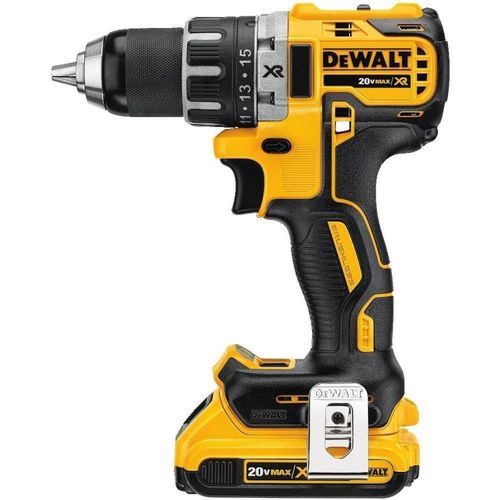
 The original cordless drill had neither a motor nor a battery. There was a hand drill in my father’s workshop long before he invested in an electric drill with a cord. The first battery-powered drill was the tool that started off the cordless revolution which eventually caused all sorts of tools to become available in cordless models. Some types of tools are more suitable to cordless use than others. Usually those tools that move around a lot in use and do not require large amounts of electricity are the best candidates for battery power. So, the electric drill, by its very nature, was the first tool to get a battery.
 When you are using a drill at many different locations, its a real pain to have to drag a cord around with you. At first, cordless drills werent very powerful and the batteries didnt last that long. For a while, that was an excuse for woodworkers to resist the upgrade to cordless. Todays cordless drills, especially in the 18 Volt class are both powerful in terms of torque and their lithium ion batteries are long-lasting. The new chargers are fast and so, with two batteries to switch off, its hard to run out of juice.
 Tool weight is important in a cordless drill or impact driver because these are tools that you hold out at arms length all day and while 5 to 10 pounds may not sound like much, each weight increase from drill to drill counts for a lot at the end of a long day on the job, even if your name is Hercules.
 Battery size, expressed in amp hours is another important consideration. All Lithium Ion, 18 Volt batteries are not alike in terms of size, weight or how long they will last between charges. That goes for battery chargers, as well. A half-hour battery charger, as opposed to a one-hour charger can make a real difference if you are constantly changing batteries on your cordless drill.



 from beginner to expert, I will try to keep my comments basic and yet complete. If you are an expert, please bear with me. If you are a beginner, this review may save you a lot of headaches at the school of hard knocks.
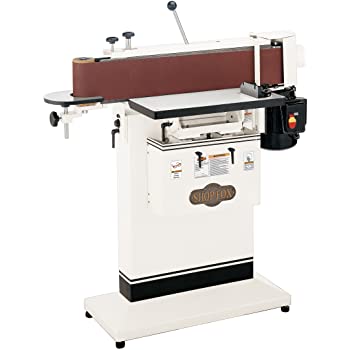
 This heavy and powerful edge sander has a 3HP 220V single phase motor which runs at 1750 RPM and drives a 6 sanding belt at 3150 feet per minute. As on all of these edge sanders, there is a small end table next to the idler roller for sanding inside curves. Included with this machine is a quick release for belt tensioning.